

CX leader’s book warns of an AI ‘trust recession’


Having led customer experience (CX) efforts across organizations ranging from Amazon to Visa, Alice Sesay Pope has seen first-hand the benefits artificial intelligence (AI) can bring. That hasn’t blinded her to what she describes as a “trust recession” stemming from how the technology is being deployed.
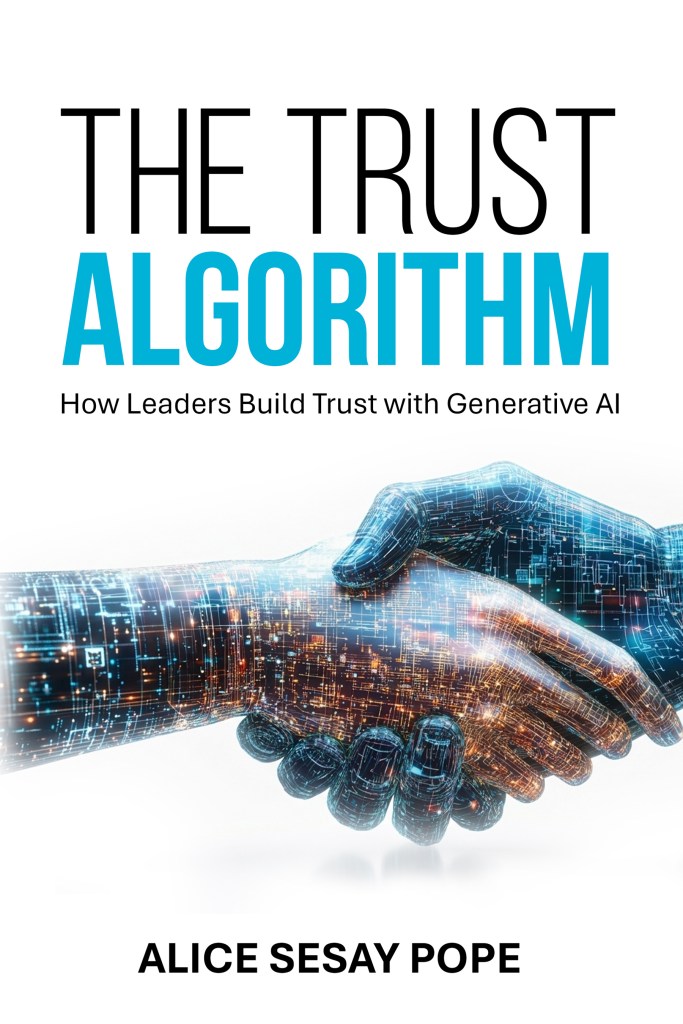
Pope, whose career also includes stints as Capital One’s head of customer advocacy and VP of enterprise complaints at USAA, is urging her peers to remember who they’re serving in her book The Trust Algorithm: How Leaders Build Trust with Generative AI. She argues that in many cases customers are doubtful that AI will serve their best interests as employees worry it will steal their jobs.
Like an economic recession, a trust recession implies negative growth in organizations’ ability to develop customer and employee relationships in a positive way. That may require pushing back on executive pressure to make organizations as AI-powered as possible.
“We all have to be honest with ourselves, especially people in the customer experience world, about the fact that these solutions aren’t perfect, we can’t just move forward because we want to gain a thumbs up or applause from a senior leader,” Pope told 360 Magazine. “If we launched something that worked well in a pilot project but is creating more detractors than promoters when it gets in front of customers, we have to be able to say ‘time out.’”
Pope believes CX leaders can assess whether AI is contributing to greater trust or not, and her book explores more than half a dozen metrics she suggests they use. These include a AI Customer Effort Score, which builds upon traditional CES by focusing on how well AI assisted the customer in accomplishing what they set out to do.
“Regret rate,” meanwhile, refers to the percentage of customers who, after an AI interaction, wish they had been connected to a human instead. She also talks about ‘experience-adjusted cost of resolution,’ which is the true cost of delivering a quality outcome, not just the cost of handling a contact.
“We need to recognize that we need to have new metrics, but somehow we’re still only looking at cost per contact, first contact resolution, or NPS,” she said.
Brands could save themselves a lot of trouble if they addressed a common gap in AI-assisted CX projects: the lack of testing with a human audit and a clear mitigation plan.
“To me, it almost seems like when we launch something, we should say what are the five things that could go wrong, and what do we do about it?” she said. “When the detection mechanism is a customer making a complaint, it’s way too late.”

Centralizing ownership of AI initiatives is another critical area, Pope said, whether that’s a CX leader or another group that can manage governance along with deployment. Otherwise there’s an increased risk of AI sprawl, or simply changes that weren’t properly thought through.
“I’ve been in situations where we received a ton of customer complaints and we couldn’t figure out exactly what bot was giving the wrong information,” she said. “It turned out it was someone in IT department who launched a feature, all in good intentions, because of their performance is being measured on how fast they’re launching some of these features.”
Pope said her hopes for the book are summed up in one of its final paragraphs, which she read aloud:
“People will remember who you were when the machines got smart. Your customers will remember whether you saw them or you saw through them. Somewhere a young leader is watching you decide, learning what leadership looks like in the age of AI and building their algorithm from yours, so write it like it matters, because it does. Because they do.”


