

Doug Stephens is giving retailers a prophesy they may not expect


Doug Stephens could have published another book about personalization, or how digital marketing channels will evolve as AI becomes more sophisticated. Instead he is offering the kind of warning that gives new meaning to his reputation as the Retail Prophet.
As a futurist, Stephens has spent his working life trying to help businesses understand changes in consumer behavior so they can adapt accordingly. His new book is not about hyping any technologies or trends, however.
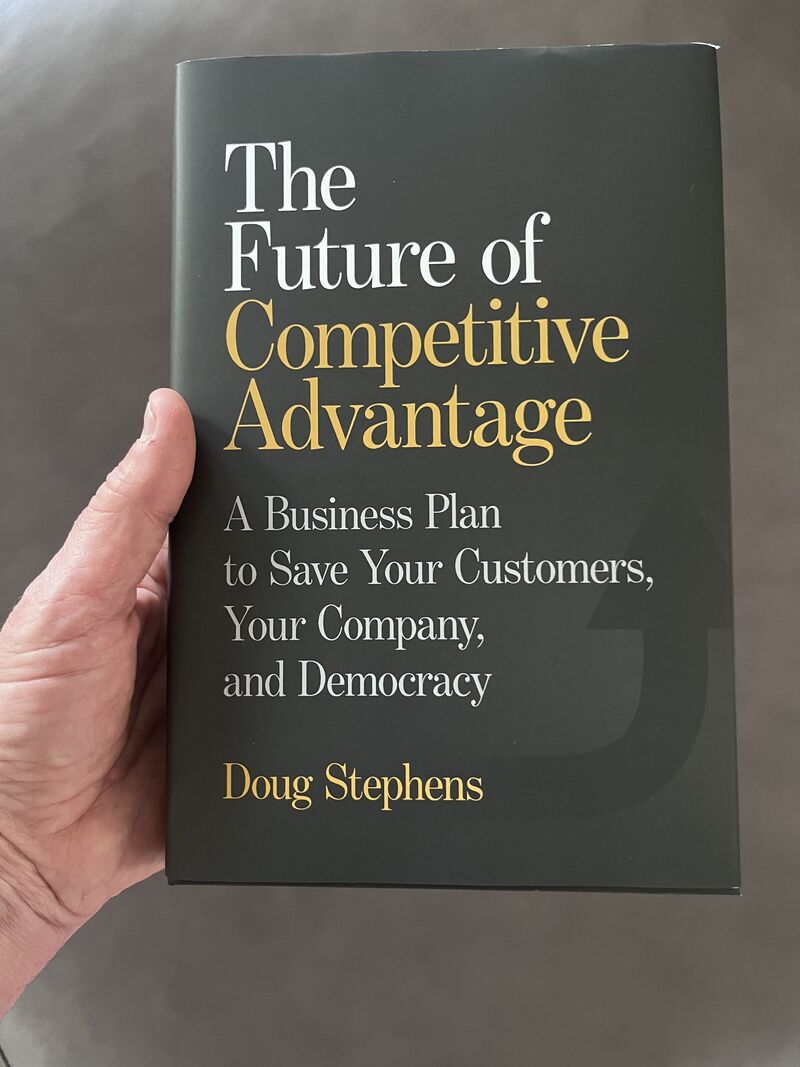
The Future of Competitive Advantage: A Business Plan to Save Your Customers, Your Company and Democracy, takes a historical look at economic, social, and political challenges that threaten today’s brands. This is followed by a detailed blueprint on succeeding in the age of uncertainty.
“It was a departure for me, and it was a very conscious one,” Stephens told 360 Magazine in a recent interview. “I wanted to be able to look my grandchildren in the eye and say, ‘I tried.’”
This interview has been edited and condensed for clarity.
When people think in terms of “competitive advantage,” I think it’s fair to say they may not immediately think of the elements you write about in this book. What inspired it?
There was a lot of debate still around what constitutes an omni-channel experience and experiential design, a lot of debate around technology, and as I lifted my gaze up from the industry and I looked around at the world, I was seeing pandemonium. I was seeing democracy hanging by a thread. I was seeing income and wealth polarization that had hit such an inflection point that we had priced two generations of consumers out of the lifestyle that their parents and grandparents took for granted. I was seeing people going into lifelong debt just to receive an education, if in fact they could even afford to do that.
I didn’t set out with the intention of writing a book about it, but I wanted to understand for my own sake how is it that we arrived at this place where society seemed so broken and so fractured, and what became apparent to me in looking at it, even at a high level initially, was that the business sector was largely responsible for this.
You focus a lot on trust in the book. CX professionals understand the link between trust and loyalty, but they might see it primarily as trust based around delivering on their brand promises. How is their success potentially limited by a lack of understanding about the historical forces and root causes of contemporary problems you’re writing about?
The average company is still living with an outdated definition of trust. They’re saying, “As long as our product performs, and our services are true to what we say they are, and we observe at least the legal required respect for data and privacy, then we’re good.” But in today’s world, where in a few taps on a piece of glass I can find out every piece of pending litigation against your corporation and have it explained to me like I’m eight years old, that is not going to cut it anymore.
Yes, trust means your product, your services, but it also means: Do you pay your fair share of taxes? Do you treat your workers with respect and dignity? Do you pay living wages? Do you say things in public that you are going against in private? In terms of your political leanings, who are you donating money to, and what are you asking for in return? All of these things now are completely visible to consumers and become part of the equation for trust.

Can CX professionals really do much to affect those areas, though? Or is it about trying to “manage up” to their business leaders?
This is really where the fairness piece comes in, right? That you treat your consumers fairly. What does that mean? That means really looking very, very closely at your positions on pricing. Are you employing any sort of dark pricing? Are you employing drip pricing? How easy is it to unsubscribe to services within your company or programs? In other words, are you being completely fair with your customers and all of your stakeholders? Because trust is born out of fairness, right? If we’re not treated fairly by a company, there’s certainly no way we can trust them. If an employee isn’t treated fairly by their employer, they’re not going to have a relationship that’s based on trust.
What’s the risk that brands are using “experience” to make up for the areas they’re falling short in terms of acting fairly and trustworthy? Is CX potentially just a front for bad underlying behavior?
I think ultimately what consumers are buying is value. They’re not buying price. They’re not buying experience. They’re not buying product. They’re buying this amalgam of something that makes sense to them. I think that’s where experience is vitally important. Is it’s always important, but I think it’s most important in categories where the product is relatively undifferentiated. A night in a hotel is a night in a hotel, right? A seat on a plane is a seat on a plane. In those environments, a modified or elevated customer experience can make an enormous difference.
But with each violation of trust, you open the door a crack to a competitor that can come in and capitalize on that opportunity. No matter how good your experience is or how good your product is, if you don’t have the consumer’s baseline trust and you’re not perceived as being a fair company, it’s all for naught.

