

Interest in rewards-based loyalty falls below 40%


After six years of studying factors that contribute to brand loyalty, SAP has found incentives such as rewards appeals to just 38 per cent of consumers.
The provider of SAP Engagement Cloud gathered survey responses from more than 10,000 consumers across the UK, USA, Hong Kong and Germany to produce its 2026 Customer Loyalty Index.
Until the most recent research, SAP found interest in incentivized loyalty usually hovered to just over half of consumers. The latest data shows a 10 per cent drop in consumers who describe their loyalty as being based on rewards they receive.
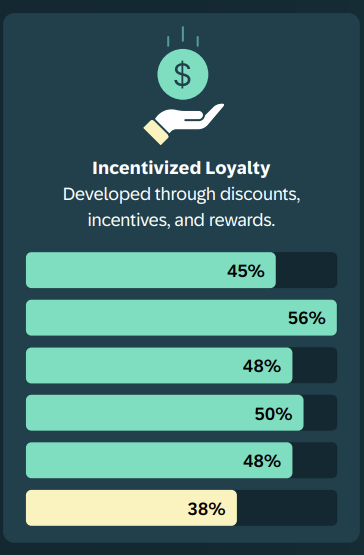
SAP breaks down loyalty across five other types, including those who show “inherited loyalty” that’s built through associations with other brands and “ethical loyalty” based on shared values.
The ultimate goal, SAP’s researchers suggest, should be what it calls unshakeable “true loyalty” based on brand love. While 34 per cent of consumers described themselves as having true loyalty two years ago, it has since dropped to 29 per cent in 2025 and back to 32 per cent for the current respondents.
“As AI makes comparisons, recommendations, and product discovery easier, customers no longer need to stay loyal simply to
access the best deal,” the report’s authors wrote. “Brands increasingly earn loyalty through relevance, consistency,
and trust rather than rewards alone.”
360 Magazine Insight
SAP has a natural interest in brands leveraging its Engagement Cloud to enhance customer experiences (CX) rather than change a points program or offer a new discount. However its research offers a helpful lens through which to evaluate whether a brand’s strategy to build loyalty is based on a sustainable foundation.
Inherited, ethical and “trend loyalty,” for instance, is like incentivized loyalty in that it tends to focus on short-term measures, and the impact may wane over time. True loyalty is often the product of consistent and iterative CX improvements that develops from an increased sense of trust.
The deeper question is how well AI will contribute to true loyalty. The report shows that true loyalty is higher among shoppers who use the technology compared with those who don’t (40 per cent vs. 29 per cent, respectively).

SAP also released a press release in conjunction with the findings highlighting that 47 per cent of Gen Z consumers say they have purchased products recommended by AI and 44 per cent would trust an AI assistant to make a purchase on their behalf. Yet 45 per cent say they have switched brands because of its use of AI.
This really shouldn’t be so surprising. Younger generations tend to be savvier with new technologies while also having higher expectations of how its works. If brands want AI to bring greater efficiency and repeat sales, Gen Z will only oblige if they see it surrounded with greater transparency and a demonstrated master of protecting their personal information.
For some brands, this could be enough to press pause on further AI deployment. Without a fully-baked set of policies and processes behind it, bringing AI into CX could threaten the brand love that leads to true loyalty. And the best way to establish those guardrails is still new territory for brands who are still determining where humans should be in the loop.
This gated 32-page report has a lot more data on what builds loyalty, as well as regional breakdowns that could be very helpful to CX pros developing their loyalty strategy for 2027.


