


How Beanfield is trying to change the telecom customer experience


When someone says, “This is literally the hardest breakup I’ve had to do in my life,” they’re usually not talking about their telecom provider. Kaitlin Buckley, however, has gotten used to that kind of sentiment from Beanfield’s customers.
Formed in the late 1980s as a community-centred networking provider in Toronto’s Liberty Village, Beanfield has evolved from connecting small businesses and commercial buildings to offering residential services. The one constant throughout that journey has been an effort to overcome the traditional antipathy most telecom customers feel towards their provider.
“People do not want to call their bank, they don’t want to call their insurance company and they don’t want to call their telecom,” Buckley told 360 Magazine in a recent interview. “They dread picking up the phone and talking to those kinds of companies. I think our approach really is centered around not having that experience.”
The battle against bulk arrangements
Even if its efforts are successful, however, customers sometimes still find themselves “breaking up” with Beanfield for reasons they can’t control. Though consumers technically have the right to choose what brand provides their Internet, wireless and home phone services, those dwelling in apartments and condominiums often find themselves stuck in what are called bulk arrangements.
These are contacts struck between developers and telcos to provide services for an entire building’s residents. That means someone who moves into a multiple dwelling building are automatically enrolled for services with a provider they didn’t choose themselves, and they have accept the provider’s technology and speed, and pay a pre-set price through the building’s monthly ‘common element or condo’ fee or rent.
According to Todd Hofley, VP of Policy and Communications, Beanfield recently applied to Canada’s telecom regulator to put an end to this practice.
“It’s really about fighting for that customer in a way that the customer might not even know that they need to be fought for,” he says. “We do not think it’s the developers’ fault. It’s the telecommunication companies who are supposed to understand the regulations and respect end users. Removing that choice, before consumers even know it’s been removed, is just so antithetical to how we think.”
CEAs vs. reps
Though Beanfield would benefit from increased access to prospective customers if bulk arrangements are scrapped, Hofley and Buckley said the company is more than willing to compete on a fair playing field with other providers.
Last year, for example, Beanfield launched a simplified online ordering process for all of its business-to-consumer services, recognizing that this stage of the customer journey can be overly complicated.
“We reduced the number of steps the user has to go through to sign up. We verify their email to ensure proper communication post sign-up. The calendar is more intuitive for install times,” Buckley explains. “We also continue to be transparent with pricing, as the user can see their monthly total on the right-hand side as they go through the order process. No hidden surprises at the end.”
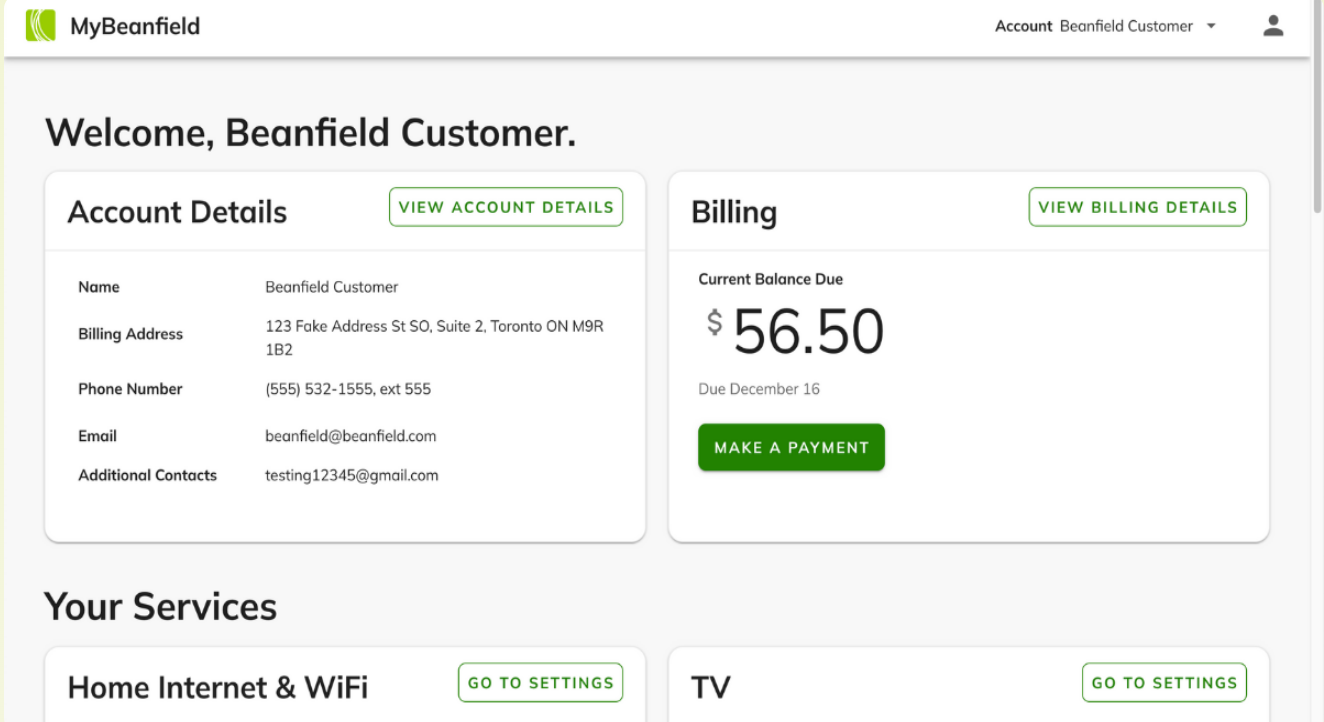
As customers begin getting services through Beanfield, meanwhile, the company is bucking the trend to replace human interaction with automated agents. Instead, Beanfield employs what it calls Customer Experience Analysts (CEA). These are local staff who live in the same areas as customers who are trained to take a personal, empathetic approach to calls.

The aim is to avoid transferring customers from one CEA to another, Buckley says, or to make customers feel like their time for support is rapidly running out.
“Our team doesn’t have a clock that starts and says, ‘I have to get through this call in two minutes and move to the next one,’” she says. “If a customer has 100 questions, we’re going to answer the 100 questions and we’re going to do it in a way that makes sure the customer is satisfied when they’re leaving.”
Instead of being a “rep,” Beanfield calls these employees analysts because they are expected to diagnose issues and look for opportunities to improve CX for the benefit of other customers.
This means for Beanfield, the key metric is the rate at which customers leave, Buckley said. There is also the voice of the customer, which often comes through social media mentions and inbound e-mail messages more than formal surveys.
“I think we see it just in the natural workings of what our customers are doing on a day to day basis,” Buckley says. “They become brand ambassadors for us. And we haven’t really had to poke them to do that.”


